Minerals
Ores, concentrates, refined metals, industrial minerals, and critical inputs used across global industry.

TerraXpert Business Unit
A modern trade unit focused on the natural resources, industrial materials, and energy systems that support infrastructure, manufacturing, mobility, and the global energy transition.
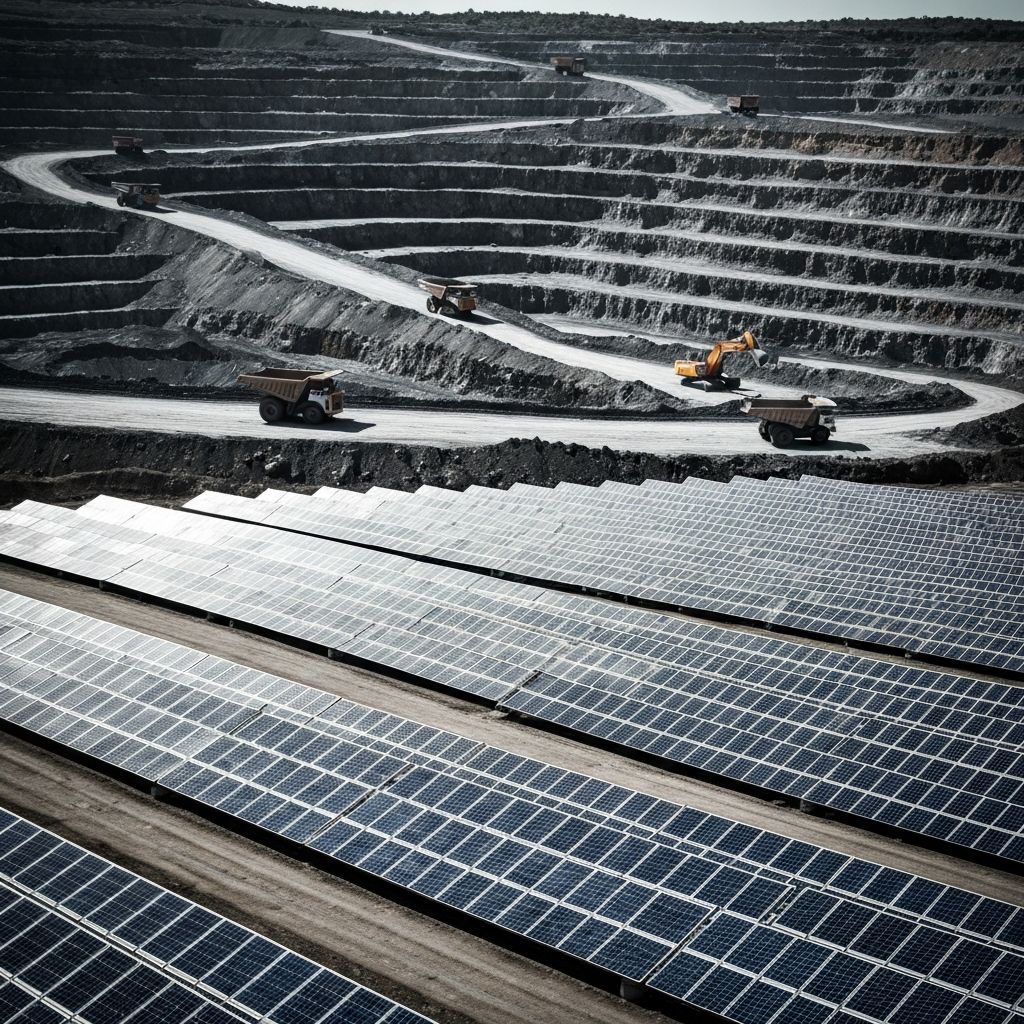
04
Mineral families
08
Material categories
04
Energy segments
Ores, concentrates, refined metals, industrial minerals, and critical inputs used across global industry.
Commercial inputs organized by specification, quality, packaging, documentation, and destination use.
Renewables, transition fuels, storage systems, and circular energy inputs connected to physical supply chains.
Minerals
Mineral markets are organized by function: power conduction, infrastructure, food systems, technology, batteries, and clean-energy equipment.
Copper, aluminum, nickel, zinc
Used in electrical systems, construction, transport equipment, packaging, and industrial manufacturing.
Lithium, graphite, cobalt, manganese
Critical inputs for energy storage, electric mobility, electronics, and renewable-energy infrastructure.
Gold, silver, platinum group metals
Used in investment, electronics, medical devices, catalysts, and high-performance industrial applications.
Silica, limestone, gypsum, phosphates
Support cement, glass, ceramics, fertilizers, water treatment, and everyday industrial processes.
Materials
TerraXpert evaluates materials through end use, grade, processing stage, packaging, logistics requirements, documentation, and destination-market needs.
Specification control
International logistics
Market access
Traceable execution
01
Steel inputs and alloys
02
Copper concentrates and cathodes
03
Aluminum products
04
Fertilizer minerals
05
Construction minerals
06
Battery-grade materials
07
Recycled metals
08
Industrial raw materials
Energy
Energy markets are changing quickly, but most systems still depend on reliable physical supply chains: materials, equipment, fuel, storage, logistics, documentation, and long-term relationships.
Solar, wind, hydro, geothermal
Clean generation sources that depend on reliable access to panels, turbines, cabling, grid materials, and storage inputs.
Natural gas, LNG, lower-carbon fuels
Energy sources used by many markets as bridge fuels while grids and industrial consumers expand renewable capacity.
Batteries, critical minerals, grid storage
Storage systems connect mineral supply chains with mobility, backup power, industrial resilience, and grid stability.
Biomass, recovered materials, waste-to-energy
Resource streams that can reduce waste, support circular operations, and complement conventional power models.
Trade Flow
A clear minerals and energy transaction depends on traceability, technical specifications, quality checks, documentation, reliable logistics, and buyer-seller alignment.
01
Origin identification
02
Supplier qualification
03
Specifications and sampling
04
Contracting and documentation
05
Logistics coordination
06
Destination-market delivery